If you’re researching skin rejuvenation treatments in Dallas, you’ve probably come across three similar-sounding options: microchanneling vs. microneedling vs. nanoneedling.
They all involve needles. They all claim to improve texture, scarring, and aging. But they’re not the same—and the differences matter.
As a licensed esthetician who specializes in Procell Microchanneling (my signature facial, The Sculpted Complexion), I’ve seen firsthand how microchanneling delivers superior results with less trauma, less downtime, and better long-term outcomes than traditional microneedling or nanoneedling.
Here’s everything you need to know about microchanneling vs. microneedling vs. nanoneedling—so you can choose the right treatment for your skin.
What Is Microneedling?
Microneedling (also called collagen induction therapy) uses a device with fine needles to create controlled micro-injuries in the skin. These injuries trigger your body’s wound-healing response, which stimulates collagen and elastin production.
How Microneedling Works
A microneedling device (like a derma pen or derma roller) punctures the skin at varying depths (typically 0.5mm to 2.5mm). The goal is to create enough trauma to trigger collagen production without causing excessive damage.
What Microneedling Treats
- Fine lines and wrinkles
- Acne scars
- Large pores
- Uneven texture
- Hyperpigmentation
- Stretch marks
Microneedling Pros
- Widely available
- Can be done at various depths
- Stimulates collagen production
Microneedling Cons
- High trauma to the skin (creates larger wounds)
- Longer downtime (3-7 days of redness, swelling, peeling)
- Higher risk of infection or scarring (especially with at-home devices)
- Inconsistent depth control (manual devices can create uneven trauma)
- More painful (requires numbing cream)
- Not suitable for active acne, rosacea, or sensitive skin
What Is Microchanneling?
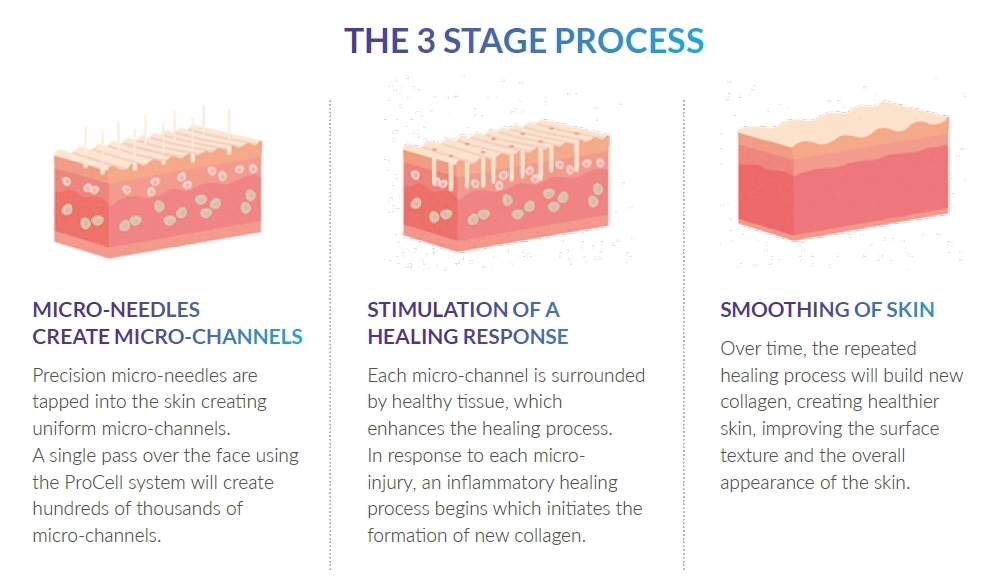
Microchanneling is an advanced, automated version of microneedling that uses stamping technology to create precise, controlled micro-channels in the skin. Studies show that controlled micro-injuries with minimal trauma yield better collagen remodeling and faster healing. Unlike traditional microneedling, microchanneling minimizes trauma while maximizing collagen stimulation.
How Microchanneling Works
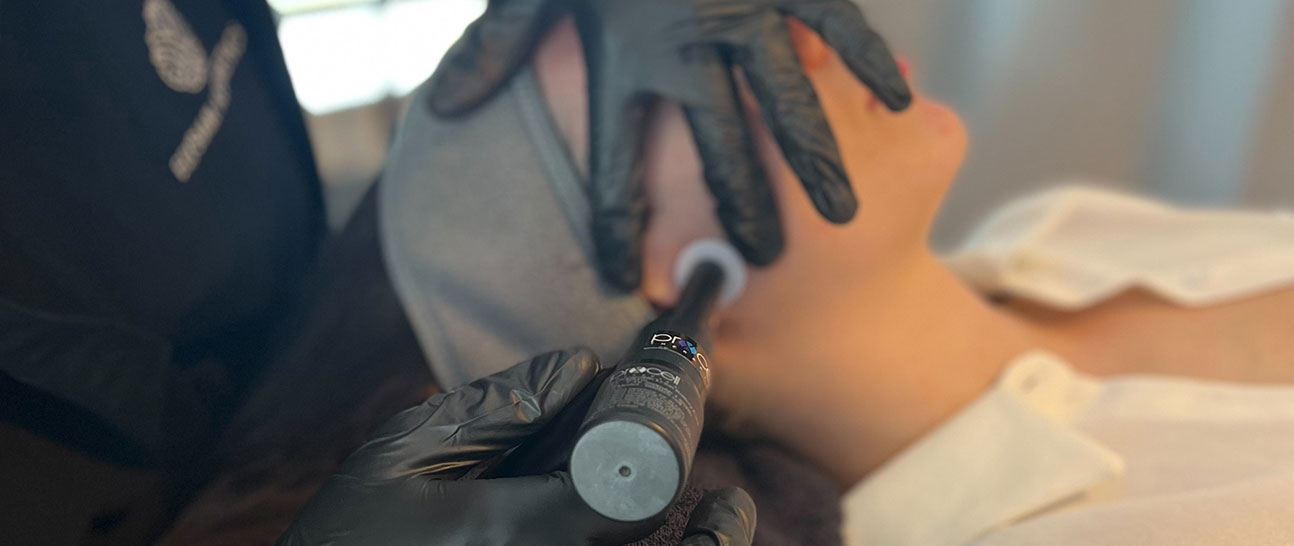
Microchanneling devices (like Procell, which I use at Arch + Skin) use a motorized stamping motion to create thousands of micro-channels in a fraction of a second. The needles move in and out vertically—no dragging, no tearing, no excessive trauma.
The micro-channels allow active serums (like growth factors and stem cell peptides) to penetrate deeply into the skin, where they can actually work.
What Microchanneling Treats
- Fine lines and wrinkles
- Acne scars and surgical scars
- Hyperpigmentation and sun damage
- Rosacea (when barrier is stable)
- Uneven texture and large pores
- Loss of firmness and elasticity
- Dull, tired skin
Microchanneling Pros
- Less trauma than microneedling (smaller, cleaner channels)
- Minimal downtime (2-3 days of mild redness)
- Precise depth control (consistent, automated stamping)
- Safe for sensitive skin and rosacea (when barrier is intact)
- Better serum absorption (channels allow deeper penetration)
- More comfortable (still requires numbing, but less painful)
- Lower risk of infection or scarring
- Faster healing and visible results
Microchanneling Cons
- More expensive than basic microneedling (due to advanced technology and professional-grade serums)
- Requires a trained, licensed professional (not a DIY treatment)
What Is Nanoneedling?
Nanoneedling is a gentler, surface-level treatment that uses extremely fine needles (0.15mm to 0.25mm) to create micro-perforations in the outermost layer of skin (the stratum corneum).
How Nanoneedling Works
Nanoneedling doesn’t penetrate deep enough to trigger collagen production. Instead, it creates tiny openings that allow serums to absorb better and stimulate surface-level cell turnover.
What Nanoneedling Treats
- Dull, dehydrated skin
- Fine lines (surface-level only)
- Product absorption issues
- Mild texture concerns
Nanoneedling Pros
- No downtime (skin may be slightly pink for a few hours)
- Painless (no numbing needed)
- Safe for all skin types (including active acne and rosacea)
- Can be done frequently (weekly or bi-weekly)
Nanoneedling Cons
- Does not stimulate collagen (too shallow to trigger wound healing)
- Limited results (only addresses surface-level concerns)
- Not effective for scars, deep wrinkles, or significant texture issues
- Requires multiple sessions for any noticeable improvement
Microchanneling vs. Microneedling vs. Nanoneedling: Side-by-Side Comparison
| Feature | Microchanneling | Microneedling | Nanoneedling |
|---|---|---|---|
| Needle Depth | 0.5mm – 2.0mm | 0.5mm – 2.5mm | 0.15mm – 0.25mm |
| Technique | Automated stamping | Manual or motorized dragging | Manual or motorized stamping |
| Trauma Level | Low | High | Minimal |
| Downtime | 2-3 days | 3-7 days | None |
| Pain Level | Moderate (numbing used) | High (numbing required) | Minimal (no numbing) |
| Collagen Stimulation | High | High | None |
| Serum Penetration | Excellent | Moderate | Surface only |
| Safe for Rosacea | Yes (when stable) | No | Yes |
| Safe for Active Acne | No | No | Yes |
| Results Timeline | 4-6 weeks | 4-8 weeks | Immediate (temporary) |
| Recommended Sessions | 3-6 treatments | 4-6 treatments | 6-12 treatments |
| Cost per Session | $$$ | $$ | $ |
Microchanneling vs. Microneedling: Why Microchanneling Is Superior
Here’s why I chose Procell Microchanneling over traditional microneedling for my Dallas studio:
1. Less Trauma, Better Results
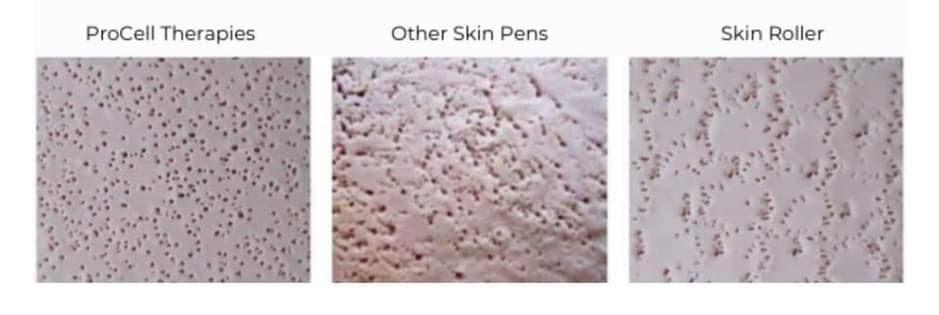
Microchanneling creates clean, precise micro-channels without dragging or tearing the skin. This means less inflammation, faster healing, and better collagen production.
Microneedling devices drag needles across the skin, creating larger, more traumatic wounds. More trauma doesn’t mean better results—it just means longer downtime and higher risk.
2. Consistent Depth and Precision
Microchanneling devices use automated stamping to ensure every channel is the same depth. This creates uniform collagen stimulation across the entire treatment area.
Manual microneedling devices (especially derma rollers) create inconsistent depth, which can lead to uneven results or over-treatment in certain areas.
3. Safe for Sensitive Skin and Rosacea
Because microchanneling causes less trauma, it’s safe for clients with rosacea, sensitive skin, or compromised barriers (as long as the barrier is stable and there’s no active flare-up).
Traditional microneedling is too aggressive for sensitive skin and can trigger rosacea flare-ups or worsen inflammation.
Microchanneling is safe for sensitive skin when your barrier is stable. Read my guide on barrier-first skincare to understand how to prepare your skin for treatment.
4. Superior Serum Delivery
Microchanneling creates thousands of micro-channels that allow active serums (like growth factors, stem cell peptides, and hyaluronic acid) to penetrate deeply into the dermis.
Microneedling creates fewer, larger wounds that don’t absorb serums as efficiently.
5. Faster Healing and Less Downtime
Most clients experience 2-3 days of mild redness after microchanneling. You can wear makeup the next day and return to normal activities immediately.
Microneedling typically requires 3-7 days of downtime, with significant redness, swelling, and peeling.
6. Lower Risk of Infection or Scarring
The clean, controlled stamping motion of microchanneling minimizes the risk of infection, post-inflammatory hyperpigmentation, or scarring.
Microneedling’s dragging motion increases the risk of complications, especially if the device isn’t properly sterilized or the technician isn’t trained.
When to Choose Nanoneedling Instead
Nanoneedling isn’t a replacement for microchanneling or microneedling—it’s a completely different treatment. Choose nanoneedling if:
- You have active acne or an active rosacea flare-up (microchanneling and microneedling are too aggressive)
- You want to boost product absorption without downtime
- You’re looking for a gentle, maintenance treatment between deeper sessions
- You have very sensitive skin that can’t tolerate deeper needling
But if your goal is to stimulate collagen, reduce scars, or improve texture, nanoneedling won’t get you there. You need microchanneling or microneedling—and microchanneling is the better choice.
What to Expect During Microchanneling at Arch + Skin
At Arch + Skin in Dallas, The Sculpted Complexion is my signature microchanneling facial. Here’s what the process looks like:
Step 1: Consultation and Skin Assessment
We’ll discuss your skin concerns, goals, and medical history. I’ll assess your skin barrier to make sure you’re a good candidate for microchanneling.
Step 2: Numbing (20-30 Minutes)
I’ll apply a topical numbing cream to ensure your comfort during the treatment.
Step 3: Microchanneling Treatment
I’ll use the Procell device to create thousands of micro-channels across your face, neck, or treatment area. The treatment itself takes about 20-30 minutes.
Step 4: Serum Application
I’ll apply professional-grade serums (growth factors, stem cell peptides, hyaluronic acid) that penetrate deeply through the micro-channels.
Step 5: Aftercare Instructions
I’ll explain your aftercare protocol: gentle cleansing, no actives for 3 days, SPF daily, and hydration.
Total Appointment Time: 1.5 Hours
Cost: $300 per session | Recommended: 3-6 treatments spaced 4 weeks apart
Microchanneling Aftercare: What to Expect
Immediately After Treatment
- Mild redness and tightness (like a sunburn)
- Skin may feel warm or sensitive
Days 1-3
- Redness fades gradually
- Skin may feel tight or dry
- Avoid touching your face, sun exposure, and sweating
Days 4-7
- Redness should be gone
- You may experience light flaking or peeling (this is normal)
- Resume normal skincare routine (avoid actives until week 3-4)
Weeks 3-6
- Skin texture begins to improve
- Fine lines soften
- Scars and hyperpigmentation start to fade
Long-Term Results
- Continued collagen production for 3-6 months after your last treatment
- Best results after a series of 3-6 sessions
Who Should Avoid Microchanneling?
Microchanneling is safe for most skin types, but you should avoid it if you have:
- Active acne breakouts or cystic acne
- Active rosacea flare-up or compromised skin barrier
- Open wounds, infections, or cold sores
- Skin cancer or precancerous lesions
- Blood clotting disorders or are on blood thinners
- Recent Accutane use (wait 6 months)
- Active eczema or psoriasis in the treatment area
If you’re unsure, book a consultation and I’ll assess whether microchanneling is right for you.
Final Thoughts: Microchanneling vs. Microneedling—Which Is The Gold Standard?
If you’re comparing microchanneling vs. microneedling vs. nanoneedling, here’s the bottom line:
- Nanoneedling is great for surface-level hydration and product absorption, but it won’t stimulate collagen or treat scars.
- Microneedling can be effective, but it causes more trauma, more downtime, and higher risk than microchanneling.
- Microchanneling delivers the best results with less trauma, less downtime, and better safety—especially for sensitive skin and rosacea.
Key takeaways:
- Microchanneling uses automated stamping for precise, controlled micro-channels
- It causes less trauma than microneedling and delivers superior serum penetration
- Downtime is minimal (2-3 days) and results are visible within 4-6 weeks
- Safe for sensitive skin and rosacea (when barrier is stable)
- Nanoneedling is not a substitute—it doesn’t stimulate collagen
If you’re in Dallas and ready to experience the benefits of Procell Microchanneling, book The Sculpted Complexion at Arch + Skin. I’ll customize your treatment plan to address your specific skin concerns and help you achieve healthy, glowing, resilient skin.
Book The Sculpted Complexion at Arch + Skin: archandskin.com
About the Author
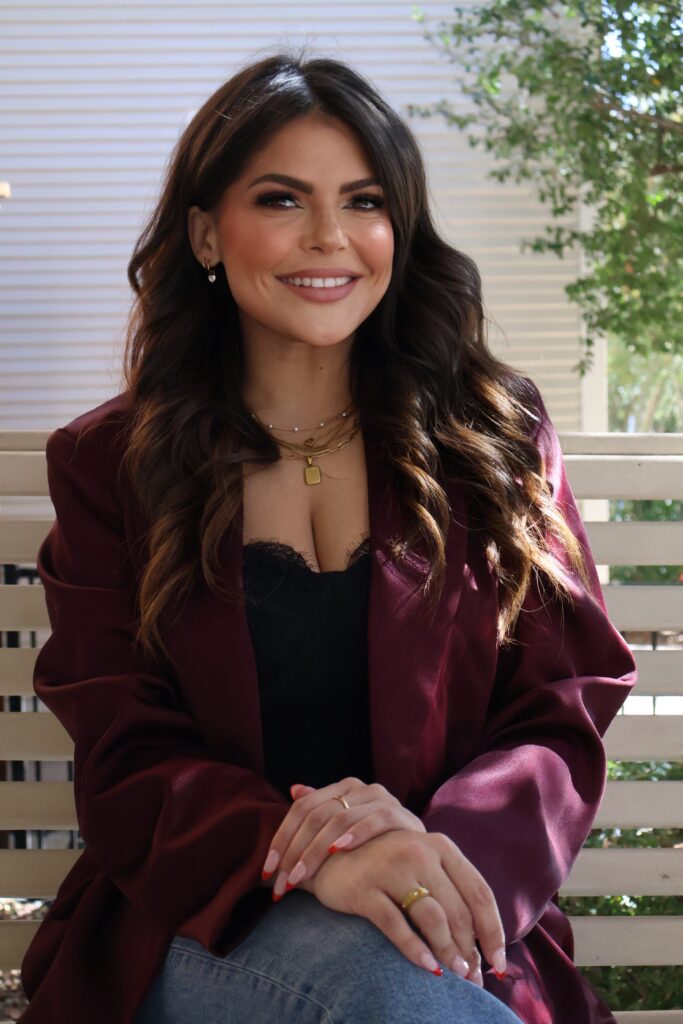
Lauren Munson is a licensed esthetician and the founder of Arch + Skin in Dallas, TX. She specializes in barrier-first skincare, Procell Microchanneling, and customized facials for sensitive, reactive, and acne-prone skin. Lauren operates under medical oversight and has performed thousands of clinical facials focused on long-term skin health.


