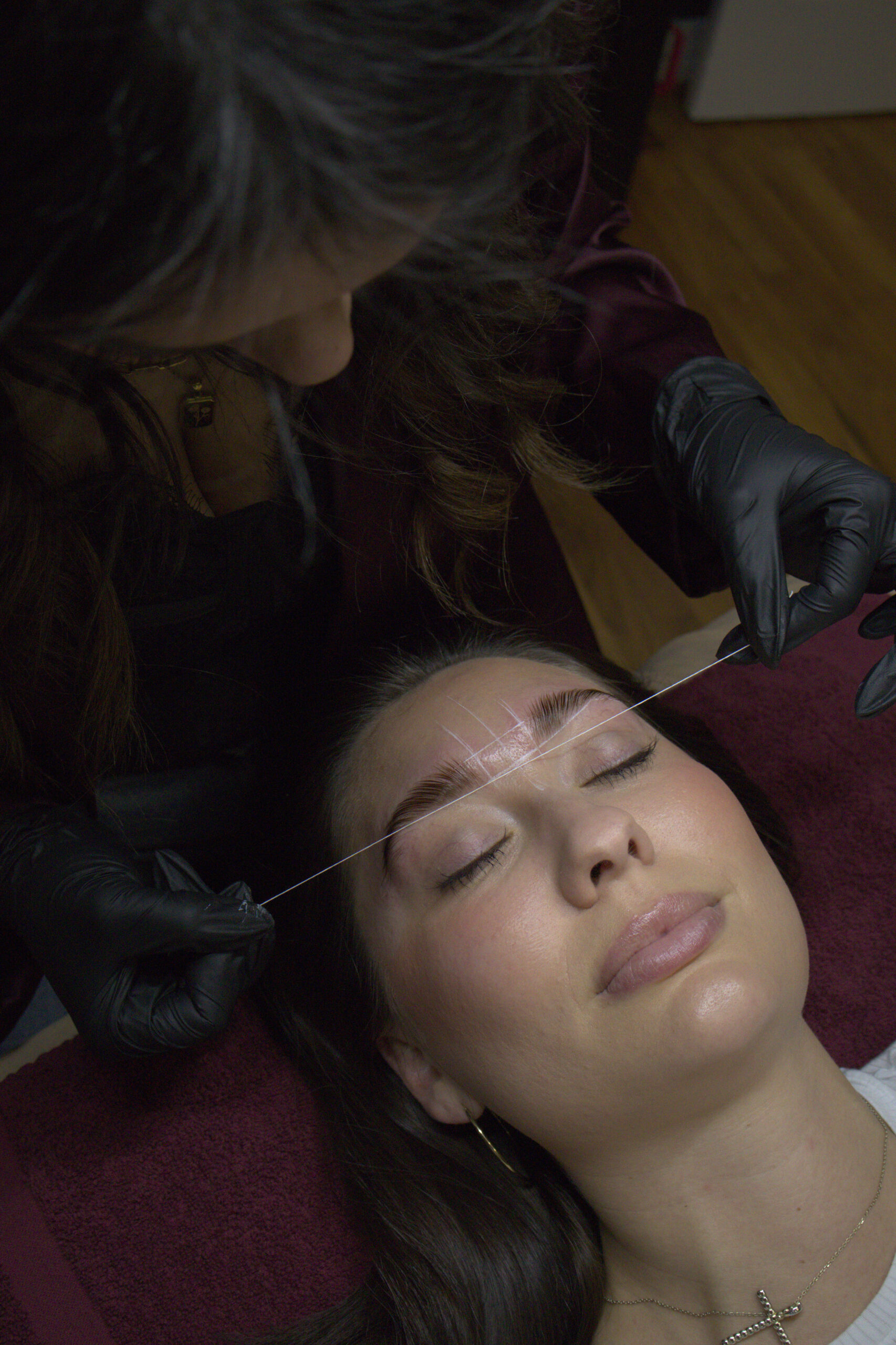
If you’ve ever wondered why your brows look different every time you get them done, the answer is simple: brow mapping.
Brow mapping is the science-backed technique that ensures your brows are symmetrical, balanced, and customized to your unique facial structure. It’s the difference between brows that look “fine” and brows that look perfect.
As a licensed esthetician who’s performed over 5,000 brow services in Dallas, I use brow mapping for every single client—whether it’s lamination, tinting, shaping, or corrective work. Here’s everything you need to know about brow mapping, why it matters, and how it works.
What Is Brow Mapping?
Brow mapping is a precise measurement technique that uses your facial anatomy to determine the ideal shape, length, and arch placement for your brows. Brow mapping uses fixed anatomical landmarks to create a customized shape.
Instead of guessing or following trends, brow mapping uses fixed points on your face—like your nose bridge, pupils, and bone structure—to create a blueprint for your perfect brow shape.
Think of it like architectural planning. You wouldn’t build a house without a blueprint, and you shouldn’t shape brows without a map.
Why Brow Mapping Matters
Without brow mapping, you’re relying on:
- The technician’s “eye” (which varies person to person)
- Trends (which don’t account for your unique face)
- Guesswork (which leads to asymmetry and regret)
With brow mapping, you get:
- Symmetry based on your facial structure
- Consistent results every time
- A customized shape that flatters your features
- Confidence that your brows are balanced and intentional
Brow mapping is especially critical for:
- Corrective brow work (fixing over-plucked or uneven brows)
- Brow lamination (the shape you map is the shape you set)
- Permanent makeup (there’s no going back—precision is everything)
- First-time brow clients (establishing the right foundation)
How Brow Mapping Works: The 5 Key Points
Brow mapping uses 5 key reference points to create the ideal brow shape. Here’s how I map every client’s brows at Arch + Skin:
1. Brow Start (Inner Corner)
How to find it: Hold a straight tool (like a brow pencil or mapping string) vertically along the side of your nose, aligned with the inner corner of your eye.
What it determines: Where your brow should begin. If your brows start too close together, your face looks narrow. If they start too far apart, your eyes look wide-set.
Common mistake: Starting brows too close together (creates a harsh, angry look).
2. Brow Arch (Highest Point)
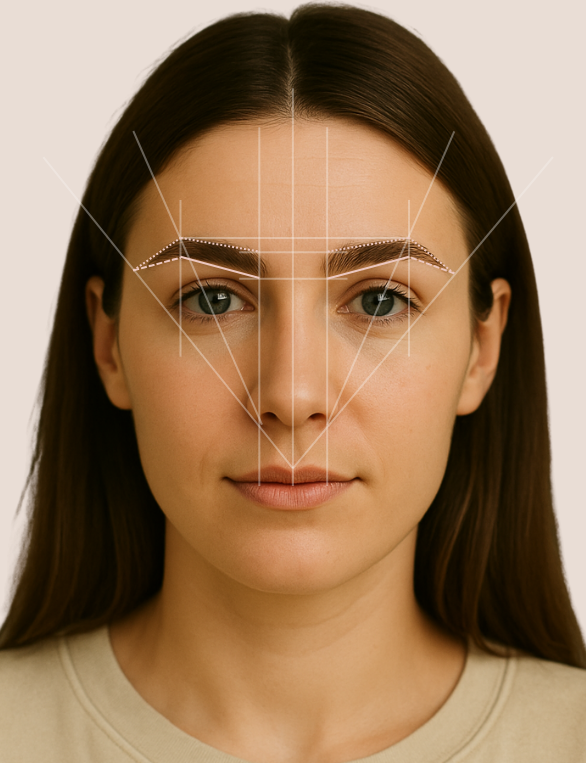
How to find it: Angle the tool from the side of your nose through the outer edge of your pupil (when looking straight ahead).
What it determines: Where your brow should peak. The arch is the highest point of your brow and creates lift. Studies show that proper brow shaping can enhance facial balance and expression.
Common mistake: Placing the arch too far inward (creates a surprised look) or too far outward (flattens the brow).
3. Brow End (Tail)
How to find it: Angle the tool from the side of your nose through the outer corner of your eye.
What it determines: Where your brow should end. A longer tail creates elegance; a shorter tail can make your face look wider.
Common mistake: Ending brows too short (ages the face) or too long (looks unnatural).
4. Bottom Line (Lower Boundary)
How to find it: This is determined by your natural brow bone and where the bulk of your brow hair sits.
What it determines: The lower edge of your brow shape. Removing hair below this line creates a clean, lifted look.
Common mistake: Over-tweezing below the brow (creates a thin, dated shape).
5. Top Line (Upper Boundary)
How to find it: This follows the natural top edge of your brow hair.
What it determines: The upper edge of your brow shape. Removing stray hairs above this line creates definition without thinning.
Common mistake: Removing too much hair above the brow (makes brows look sparse).
Brow Mapping Techniques: String, Pencil, or Digital?
There are a few different methods for brow mapping. Here’s what I use and why:
String Mapping (My Preferred Method)
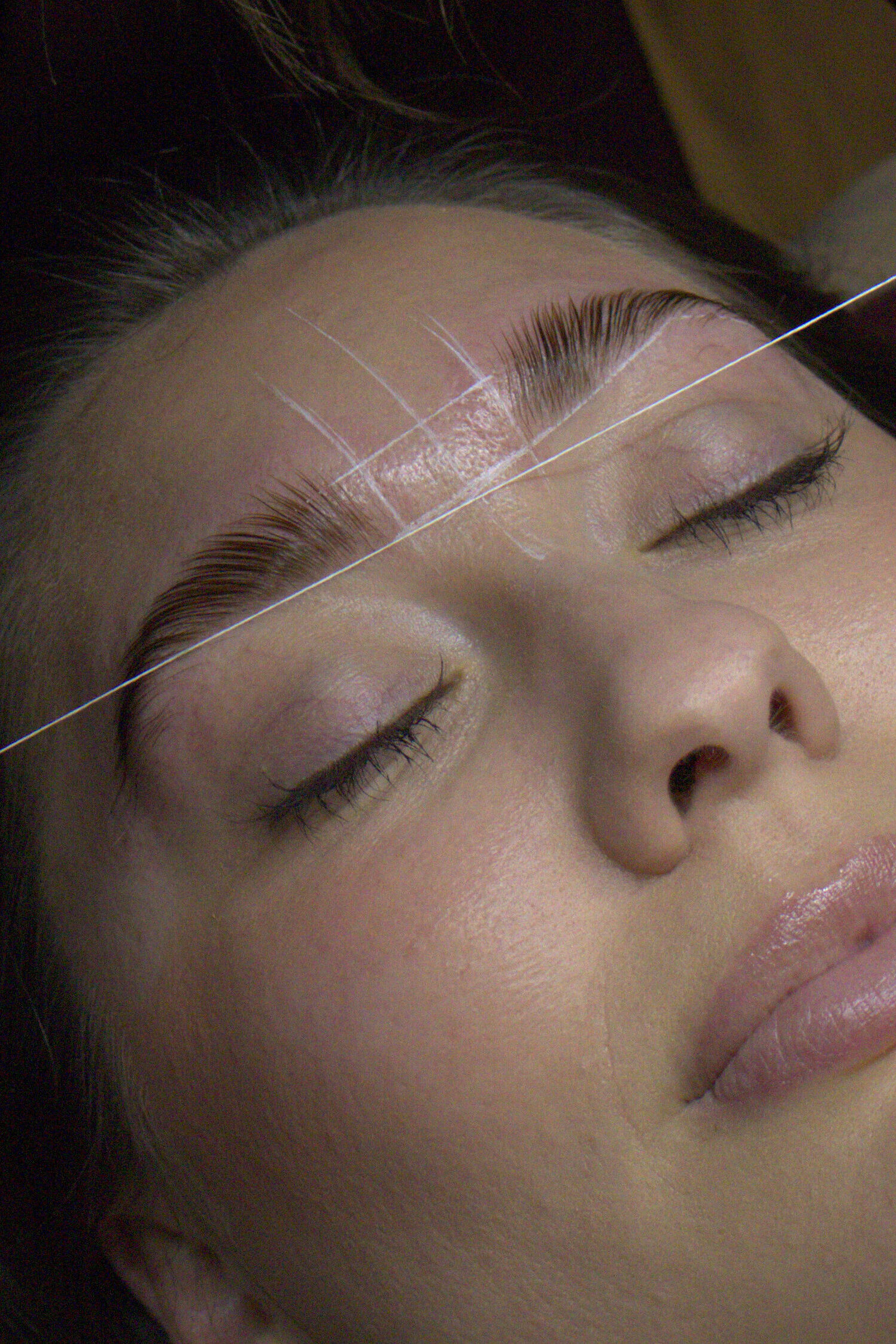
I use a pre-inked mapping string to mark the 5 key points on your face. The string creates precise, visible guidelines that stay in place throughout the service.
Why I love it:
- Extremely accurate
- Visible throughout the entire service
- Allows me to double-check symmetry before, during, and after shaping
- Gives clients a clear visual of the plan
Pencil or Brush Mapping
Some technicians use a brow pencil or makeup brush to find the 5 points and mark them with a brow pencil.
Pros: Quick and accessible
Cons: Marks can smudge or fade during the service
Digital Brow Mapping
Some studios use apps or digital tools to map brows based on a photo.
Pros: High-tech and precise
Cons: Doesn’t account for 3D facial structure or how brows move when you talk/smile
What to Expect During Brow Mapping
Here’s what happens during your brow appointment:
Step 1: Lamination (If Booked)
If you’re getting brow lamination, I’ll apply the lamination solution first to lift and set your brows into their new shape.
Step 2: Mapping and Review
After lamination is complete, I’ll map your brows and show you the plan. This is your chance to ask questions, request adjustments, or share concerns.
Step 3: Tinting and Shaping
I’ll apply tint to enhance fullness and definition. While the tint is processing, I’ll shape your brows by removing hair outside the mapped boundaries using waxing, tweezing, or trimming (depending on your skin sensitivity and hair type).
Step 4: Final Check
Once the tint is removed and mapping marks are cleaned off, I’ll check symmetry and balance. If any tweaks are needed, I’ll make them. Then we do a final check together to make sure you love your brows.
Brow Mapping for Different Face Shapes
Brow mapping is customized to your face, but here are general guidelines for different face shapes:
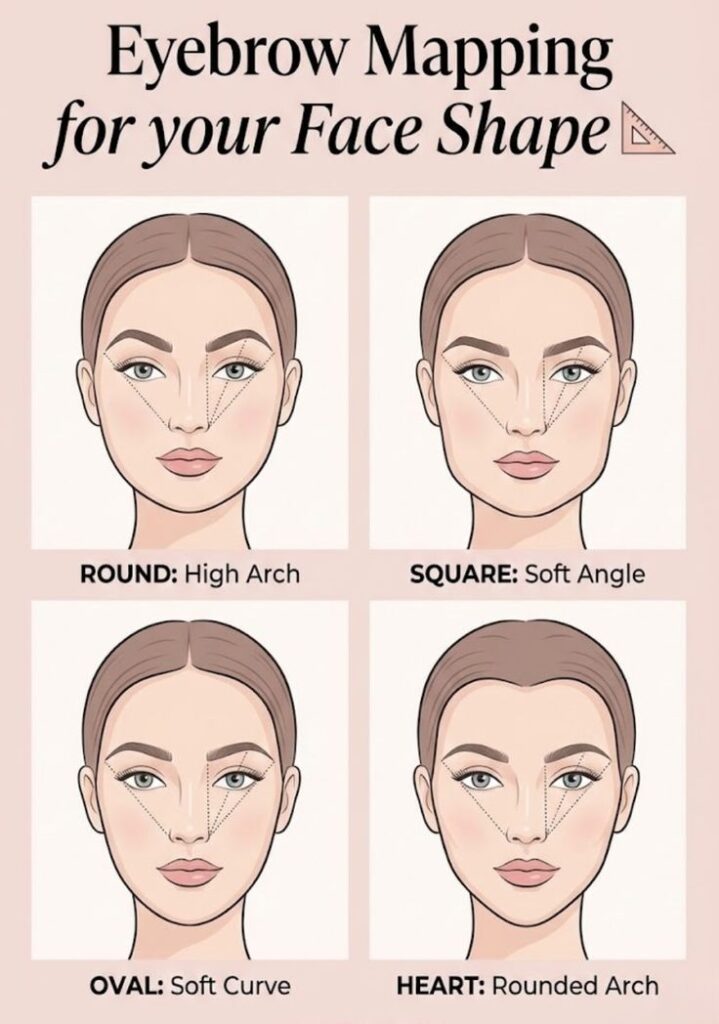
Oval Face
- Goal: Maintain balance (oval faces are naturally proportionate)
- Brow shape: Soft arch, medium length
Round Face
- Goal: Create length and lift to elongate the face
- Brow shape: Higher arch, angled tail
Square Face
- Goal: Soften angular features
- Brow shape: Soft, rounded arch with a gentle tail
Heart-Shaped Face
- Goal: Balance a wider forehead and narrow chin
- Brow shape: Soft, rounded brows (avoid harsh angles)
Long Face
- Goal: Create width to balance length
- Brow shape: Flatter, straighter brows with less arch
Important note: These are starting points. I always customize based on your unique bone structure, brow hair density, and personal preferences.
Common Brow Mapping Mistakes (And How to Avoid Them)
Mistake 1: Ignoring Bone Structure
Brow mapping should follow your natural brow bone, not just your nose and eyes. If your bone structure is asymmetrical, I’ll adjust the map to create visual balance.
Mistake 2: Mapping Without Considering Brow Hair Growth
If your brow hair grows in a certain direction or pattern, I’ll adjust the map to work with your natural growth, not against it.
Mistake 3: Following Trends Instead of Your Face
Instagram brows might look amazing on someone else, but if they don’t suit your face shape or bone structure, they won’t work for you. Brow mapping ensures your brows are customized, not cookie-cutter.
Mistake 4: Not Remapping for Each Service
Your face changes over time (weight fluctuations, aging, muscle movement). I remap every client at every appointment to ensure continued accuracy.
Brow Mapping in Dallas: What to Expect at Arch + Skin
At Arch + Skin, brow mapping is included in every brow service. Here’s what that looks like:
- Consultation: We’ll discuss your brow goals, concerns, and preferences
- Mapping: I’ll use pre-inked string to mark the 5 key points
- Review: You’ll see the map and approve the plan before I start shaping
- Shaping: I’ll remove hair outside the mapped boundaries
- Lamination/Tinting (if booked): I’ll set or enhance your brows based on the map
- Aftercare: I’ll explain how to maintain your new shape at home
I also offer corrective brow mapping for clients with over-plucked, uneven, or damaged brows. This involves mapping your ideal shape and creating a regrowth plan to restore fullness over time.
Final Thoughts: Brow Mapping Is Non-Negotiable
If your brow technician isn’t mapping your brows, they’re guessing. And guessing leads to asymmetry, inconsistency, and frustration.
Key takeaways:
- Brow mapping uses your facial anatomy to create a customized brow shape
- It ensures symmetry, balance, and consistent results
- Every brow service should start with mapping—no exceptions
- Brow mapping is especially critical for lamination, corrective work, and permanent makeup
If you’re in Dallas and ready for expertly mapped, sculpted brows, book your appointment at Arch + Skin. I’ll make sure your brows are perfectly balanced, customized, and built to last.
Book your brow mapping and shaping at Arch + Skin: archandskin.com
About the Author
Lauren Munson is a licensed esthetician and the founder of Arch + Skin in Dallas, TX. She specializes in brow mapping, lamination, and corrective brow work. Lauren has performed over 5,000 brow services and is the creator of The Arch Method™, an advanced brow certification program for licensed professionals.


